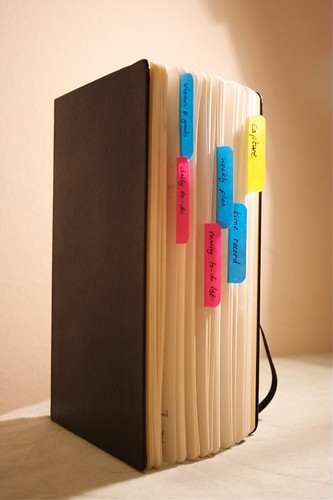
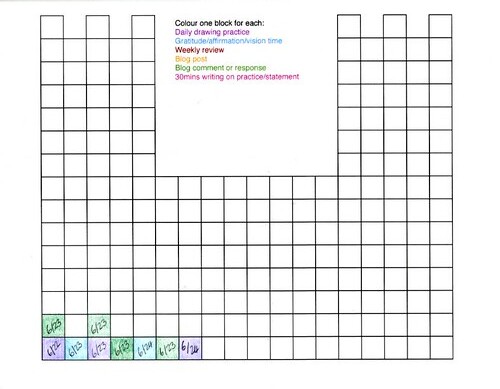
My Ideas Board as of this morning
Friends and neighbors often ask me "How do you find time to paint? I don't know how you do all this". Mostly it just takes determination, but here a few tips I picked up along the way:
Finding TimeThe most common advice I see for fitting in a new activity is to schedule it as an appointment, and then keep that appointment as you would any other. I agree with this - it works and over time will make creative time an essential habit. It sounds so simple but there is a first step that is almost never mentioned: before you start making appointments (only to break them or let them slide by because something else gets in the way), you must make a
commitment. You have to be committed to keeping those appointments or rescheduling only if you have to.
Vague ideas to be 'more creative' will not happen.
Make the time. Perhaps schedule a creative playdate with a friend, preferably one who is not too chatty!
If you think you have NO time at all in your week try this: keep an hour-by-hour note of your activities throughout the day - from waking to sleeping. If you have a job to go to you can simply blank that section of time out of course! Note down your energy levels too - are you buzzing in the mornings or are you a night owl? You need to know your best time of day to work. From these notes you should be able to identify a window or two when you could create - perhaps instead of watching TV or surfing the web.
Location, Location, LocationDo you have a place where you do your creative work? It doesn't have to be a dedicated studio, it can be the kitchen table, but does it have good light? Do you enjoy working there? There may be some simple changes you can make, like rotating a desk so you get more light from the window.
Where are your supplies stored? They should be close by your work area and all together. Being able to quickly pull out a box and get going makes a huge difference.
This all brings me to one thing:
distractions. What are yours? Mine are the computer, annoying levels of mess and New Projects. I can wander off on a New Project tangent for days. Try and have your work area isolated from your main distractions!
Flexibility, a.k.a. Yoga for SchedulesAs my friend Anne says, "Stuff happens". Actually she isn't as polite about it as that, but she's right - stuff does happen. Sometimes the stuff is out of our control and all we can do is cope. Sometimes the stuff is actually bad planning - taking on way too much all at the same time.
For these reasons, our schedules need to be able to adapt and then
have the creative windows reappear. Some things you can try:
- Have an essentials list - these are the things you absolutely MUST do each day or week in order to feel balanced and sane. This list might include taking a bath, swimming, drinking enough water, writing in a journal for 15 minutes or spending 15 minutes a day with your sketchbook. These are the things that you will keep up even when the world goes crazy around you so that you will be able to cope.
- If time crunches become too regular then make a "to stop" list - a list of activities you will give up so that you can find more time to be creative.
- Write out your commitments for the next 3-12 months and keep a rolling calendar of these - don't let your 'current projects' list get too long: 3 is more than enough and yes, major family activities are a project. Are there any clashes? Do too many projects fall due the same week or month?
Small StepsBut what if your schedule goes up in the air like this - how do you get back into the studio? When all is chaos, do NOT stop doing creative things, just scale them down. One secret in getting back to work is to never truly stop. Try to spend moments with a sketchbook, or flick through your idea books. Stressed? Tidy and clean your workspace so that you are ready to go when you are better able to focus and be creative.
Getting Back into your StrideIf you didn't manage to keep working it can be hard to get going again. Perhaps you lack an idea or can't remember where you left off. Believe me when I say that the hardest part is starting - even if you rearrange your pens or paints for 30 minutes you will have started. For some reason a tidy work surface is a magnet for new creative work. If that doesn't do it for you, pull out a book and try a new technique or play with color exercises. Spend your entire, scheduled creative time doing
something, however hard it feels. It will get easier.
I find it helps to have some kind of goals and long-term structure to my creative time. For a while I got this from external courses, but now I have a self-imposed goal to direct my work: I'm working on a series of paintings on the theme of trees. Even without access to classes a structure can be found:
Krista Meister has set herself a self-directed curriculum of art studies. Very inspiring!
And what do I, personally do?I try not to schedule too much into a single week or over-commit on other activities. I do volunteer at the school but mainly in the classroom and never more than I am happy to do.
It helps that my studio space is in the garage, away from the house, the phone and the computer. And only 10 seconds commute time. I go out there with my coffee as soon as the youngest is in school (9a.m.) and stay there until it's time to pick her up (12 or 2:30). If I run out of ideas or things to work on I tidy up a bit, make some fresh coffee and then push some ideas around in a sketchbook.
Writing this post has been a great reminder for me - 'stuff' has really happened and I'm reminded that I need to re-focus on the most important things and put the rest on hold.
Some blogs that have helped me treat my creative time as working time and learn to be a freelancer:
Productive FlourishingZen Habits